Hire an AI teammate.
Share it with your people. It learns from all of you and builds itself around how you work.
Ask it from wherever your people already talk
 Slack
Slack Teams
Teams WhatsApp
 Telegram
Live
An AI teammate’s space.
Go on, click around.
Meet Kit, the AI teammate that runs Acme’s feedback loop. This is the real product: ask Kit something, open the app it built, read what the team has taught it.
Why it needs a space
You ask in a chat.
The work stays
in its space.
Most AI at work lives in chat, and by Friday the answer is forty messages up a thread only you can see.
A teammate on Lemma puts the work somewhere: briefs in pages, lists in tables, recurring jobs in workflows, screens in apps. Your people open the same ones it works in.
 Kit
KitWrite up what users told us this week.
Kit
Wrote the report.Feedback report, week 40
Keep every report, grouped into themes.
Kit
Made a table.Feedback themes
When a fix ships, tell everyone who reported it, once Dev says it’s live.
Kit
Built a workflow.Close the loop
Put the whole loop on one screen.
Kit
Built an app.Feedback loop
KitWrite up what users told us this week.
Kit
Wrote the report.Feedback report, week 40
Keep every report, grouped into themes.
Kit
Made a table.Feedback themes
When a fix ships, tell everyone who reported it, once Dev says it’s live.
Kit
Built a workflow.Close the loop
Put the whole loop on one screen.
Kit
Built an app.Feedback loop
Pages
Documents you write together.
Ask from anywhere in a page and it writes there. Charts come from your tables, table views read the rows fresh, and a comment that mentions it comes back as an edit.
In Kit’s space: Feedback report, week 40, with every theme still waiting on a fix.
How pages work →Tables
The list everyone works from.
Real rows with typed columns. Your teammate moves them as the work moves, your people tick them off, and each person can be kept to their own.
In Kit’s space: 222 reports in nine themes, each with its ticket, its fix and an owner.
How tables work →Workflows
Work that changes hands.
The stages of a job, written down once. It starts on its own, hands each step to your teammate, to code or to a named person, and asks them where they already chat.
In Kit’s space: When a PR merges it drafts the replies, then waits for Dev to say it’s live.
How workflows work →Apps
A screen built for one job.
The internal tool you never had time to build, made by asking. It runs on the same tables, as whoever opens it, so each person sees their part.
In Kit’s space: Feedback loop, every problem from “no fix yet” to closed.
How apps work →How it works
Start with one job.
Most teams begin with the thing somebody does every Monday and would rather not.

Give it a job.
Say what it’s for in a sentence. It asks for what it needs.

Let your people in.
Add who it works with. Each of them sees their part.

Correct it once.
It writes the lesson down and works that way from then on.
It builds
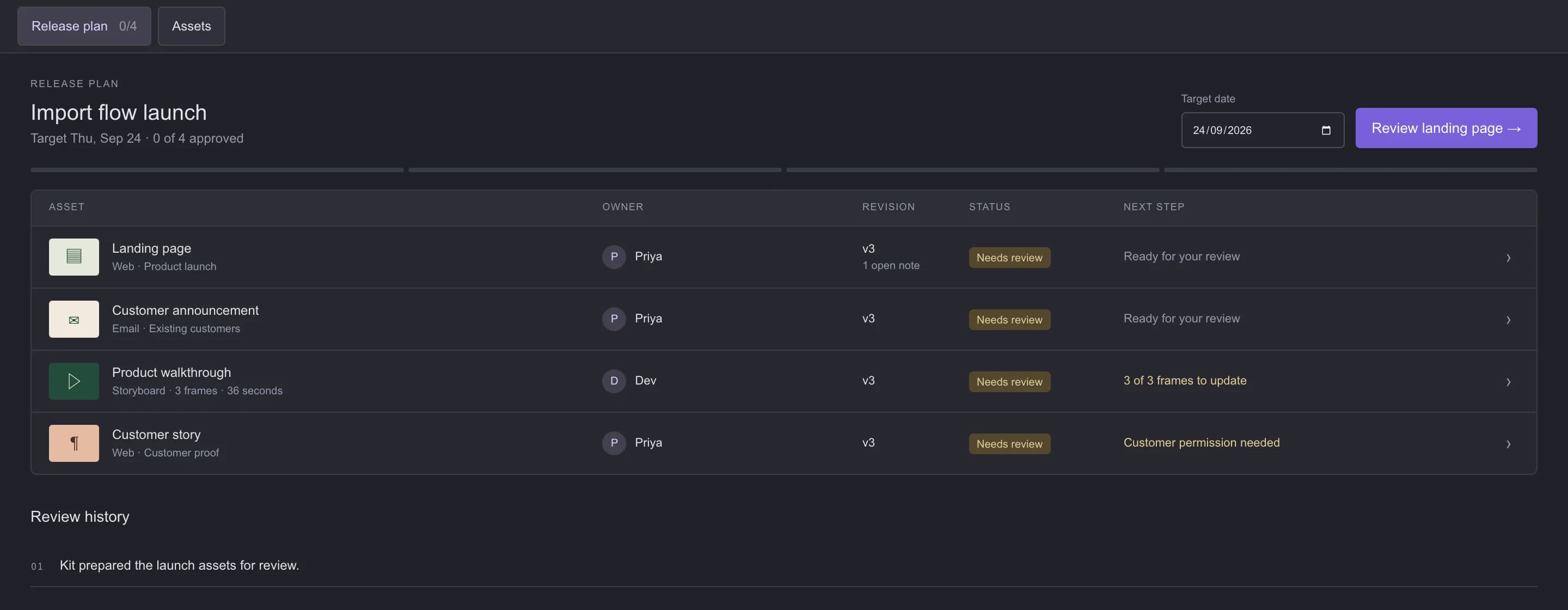
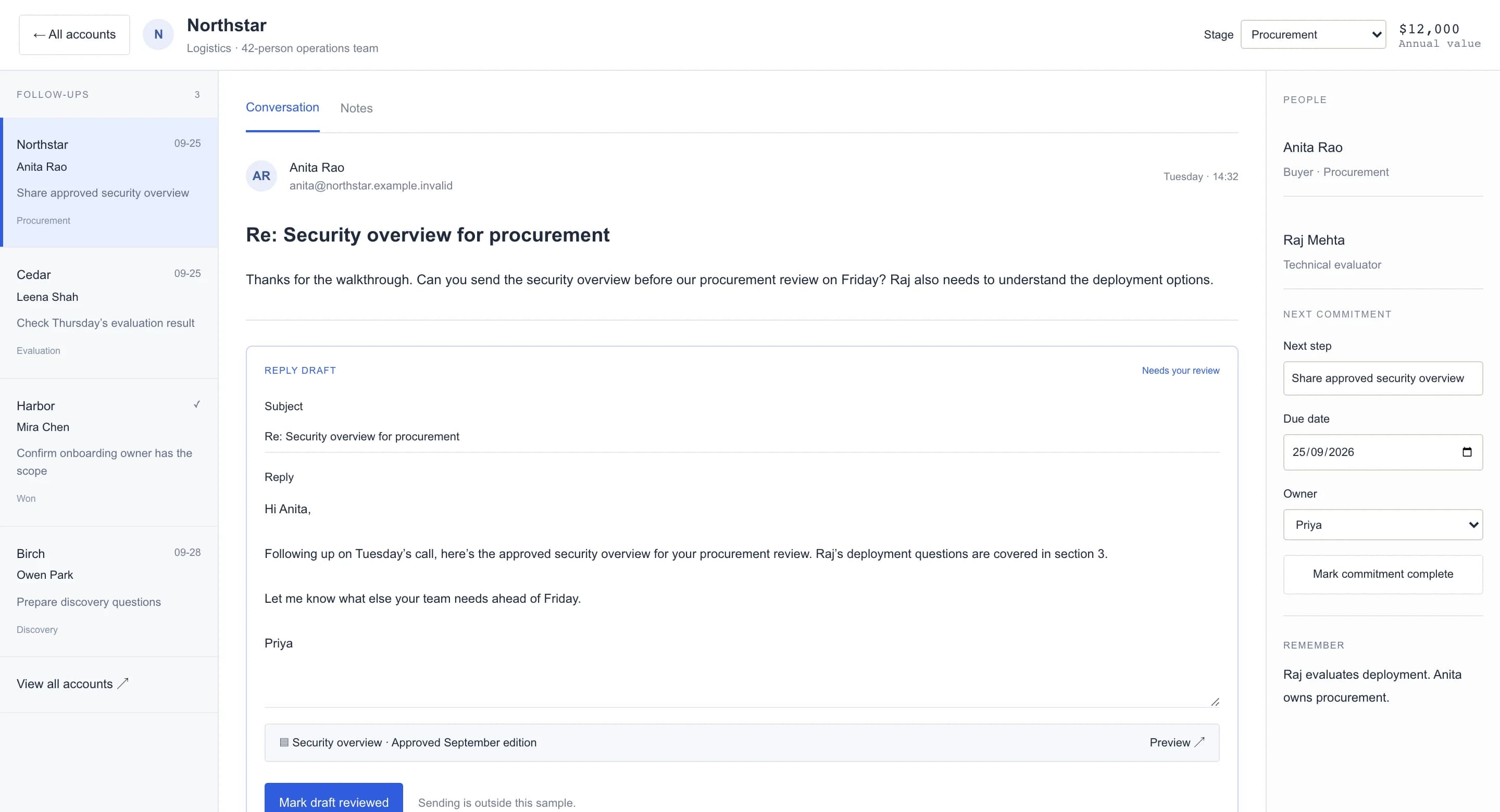
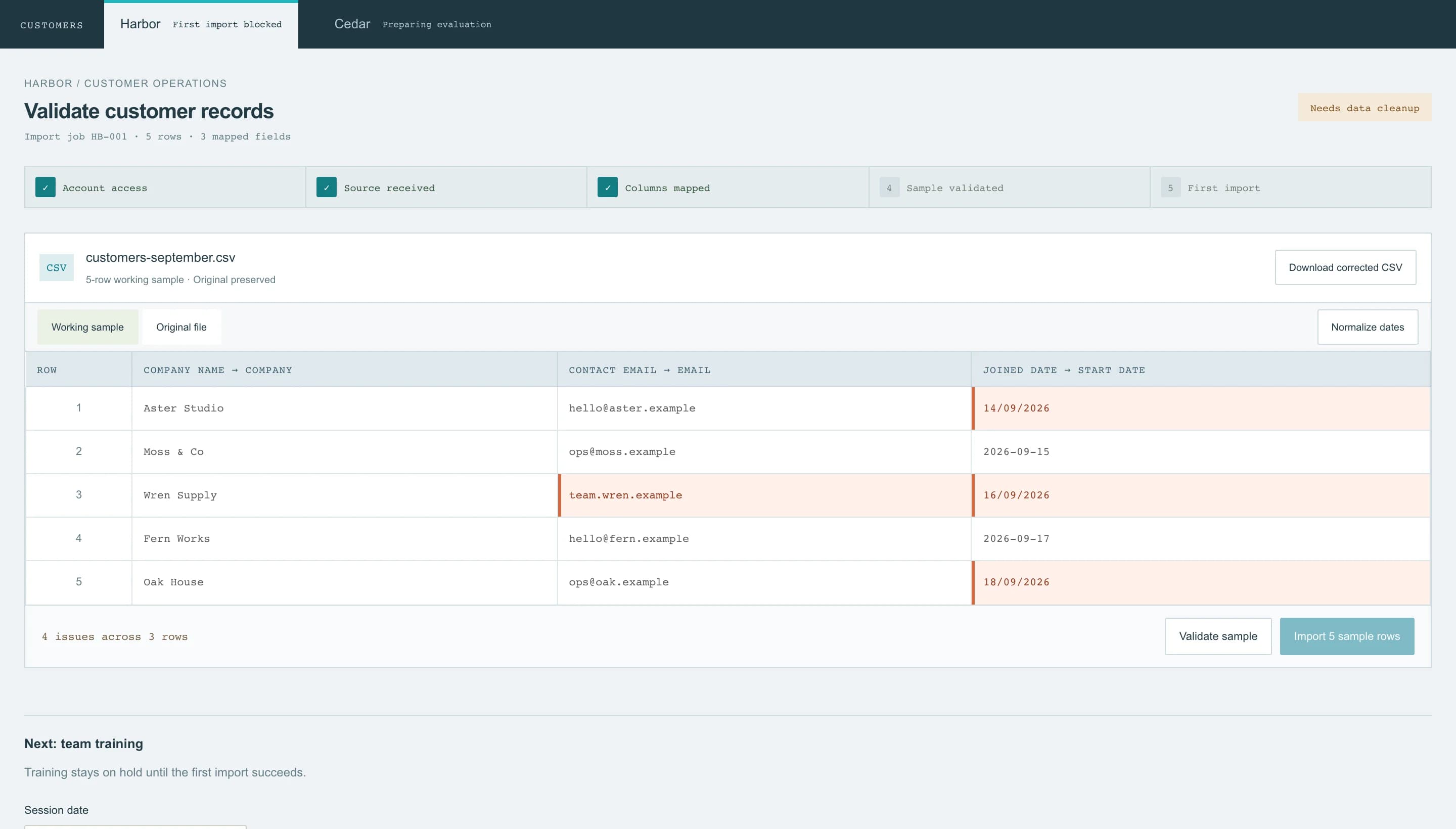
The tools the job needs, built for it.
Every teammate makes the screens its work calls for, and everyone involved opens them.
Shared, not copied
Everyone asks. Each sees their part.
Add the people who need it. It answers each of them within what their role allows, and checks with the right person before it acts.
- Roles and access per person
- Approvals where a person should decide
- One record of what happened

It remembers
Correct it once.
It writes the lesson down where your people can read it, and works that way from then on. Open any note to change it.
How memory works →


Trust
Built for real work.
Permissions that hold
Roles per person, access per row, approvals where a person decides. The same rules in the app, in Slack and on WhatsApp.
Your model, or ours
Hosted models, your own provider key, or the coding agent already on your machine: Claude Code, Codex, Cursor.
Open source
AGPLv3 core, Apache 2.0 SDKs. Read how it works, and run it yourself when you need to.
Open source, from the start
Your work.
An open foundation.
See how Lemma works. Run it on your own infrastructure. Help shape what it becomes.
AGPLv3 core · Apache 2.0 SDKs