/memory/northstar.md
Northstar
- Anita Rao is the buyer and signs. Raj is the technical evaluator: send him the detail, send her the decision.
- Procurement deadline is Friday.
Lemma · Memory
When someone corrects your teammate or settles how something is done, it writes a short note in the same reply, and checks its notes before it answers anyone. Every note is a file you can read and fix.
Corrected once about who signs.
Why notes
An AI that forgets makes you its memory: you and every colleague repeat the same corrections. So your teammate lifts each lesson out of the chat and into its space, where it holds for whoever asks next.
The chat ends. The note stays.
 Remy’s space
/memory/northstar.md
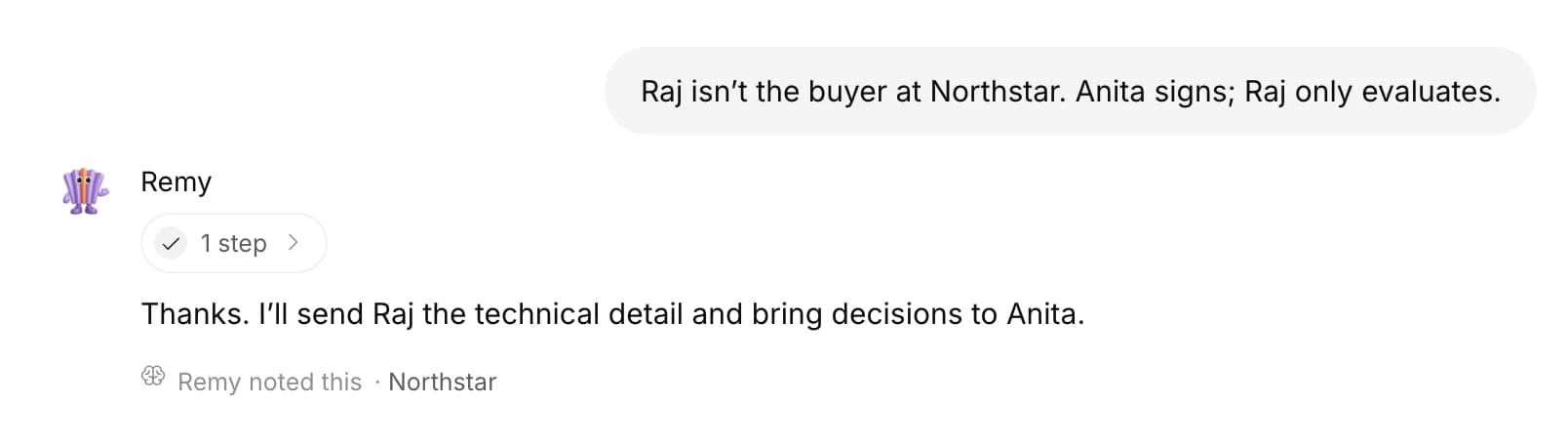
Raj isn’t the buyer at Northstar. Anita signs; Raj only evaluates.
Remy
1 stepThanks. I’ll send Raj the technical detail and bring decisions to Anita.
Remy noted this·Northstar
What it keeps
Corrections, decisions with their reasons, how the team works, how you like things. Not small talk, and not figures that belong in a table. When a fact changes, it rewrites the note rather than contradict it.
A dot means it changed this week.
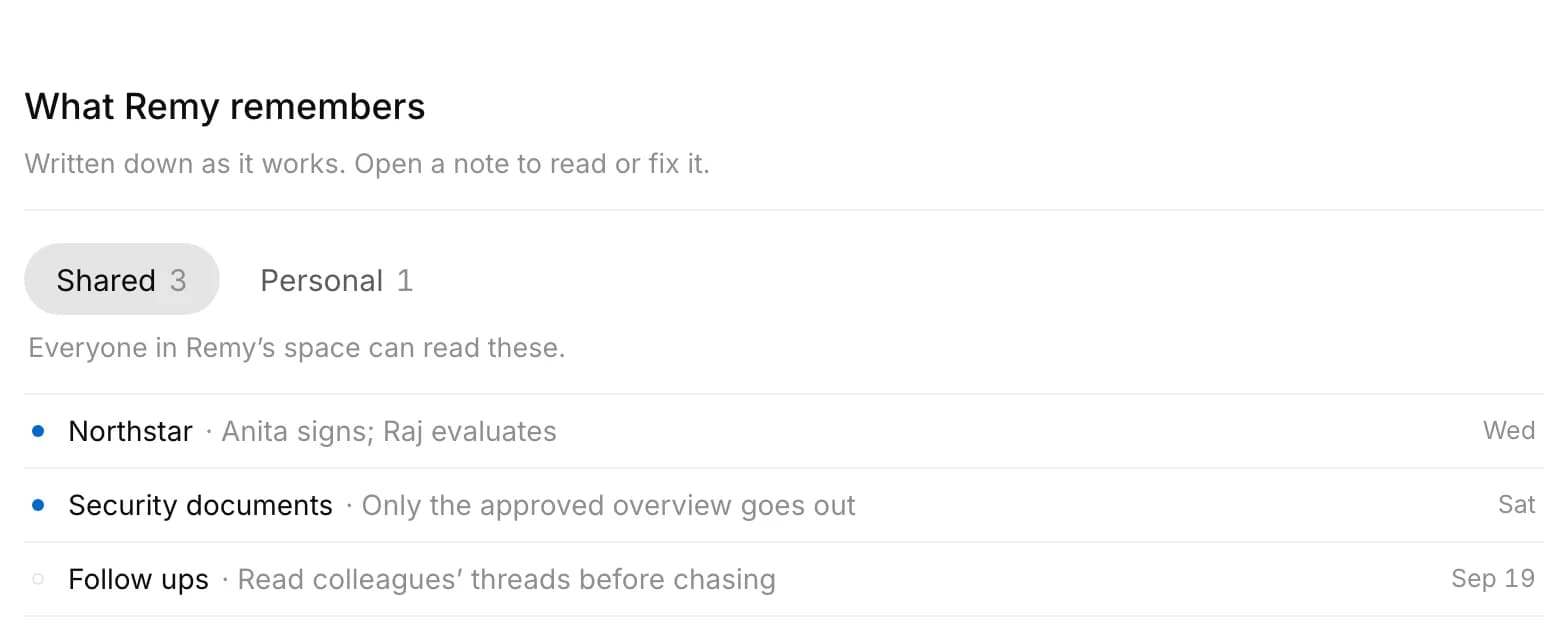
Shared notes
What the team should know goes in shared notes that apply to every conversation, in the app, in Slack or by email. A note written at 10:02 is in use at 10:05. Nothing is retrained.
One note links two conversations.
RemyPersonal notes
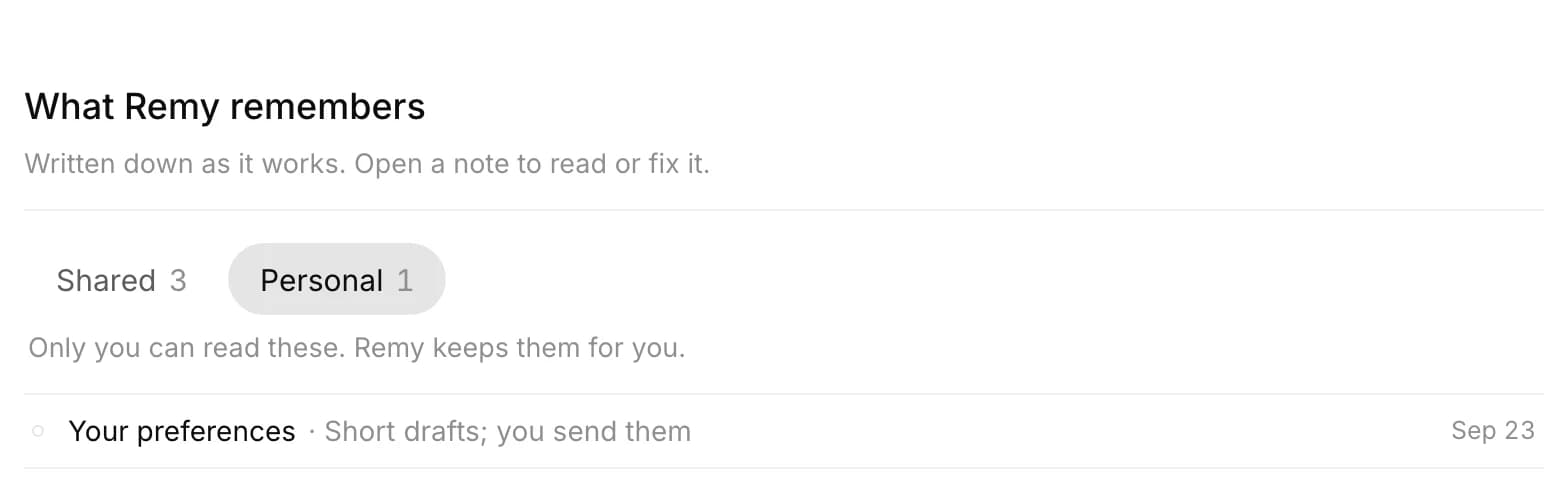
Your preferences go in notes only you can read, and they follow you into Slack and WhatsApp. A colleague’s conversation never loads them. Say “just for me” or “for the team” when it matters.
Only you can read these.
Before it answers
Each set of notes has a short index. Your teammate reads the indexes first and opens a note when a line matters, most personal first, so your own preferences aren’t crowded out.
Four indexes, narrowest first.
Remy· a conversationWho should get the Northstar contract?
Remy
Anita Rao. She signs. Want a three-line draft to send her?
Read before every reply
1You, with Remy
Your preferences· Short drafts; you send them
2YouNothing yet
3Remy’s own workNothing yet
4Everyone in Remy’s space
Northstar· Anita signs; Raj evaluates
Security documents· Only the approved overview goes out
Read and fix
Notes are plain markdown, not a hidden store. Click the noted line under a reply to open what it wrote. Change Friday to Thursday, and its next answer says Thursday.
Change the file, change the answer.
Remy/About/NorthstarWhat Remy remembers
Written down as it works. Open a note to read or fix it.
Everyone in Remy’s space can read these.
Northstar
RemyPriya’s conversationWhen’s the Northstar deadline?
Thursday, for procurement.
Skills
Notes are a line or two. A procedure, like answering a security questionnaire, becomes a skill: a written how-to it follows whenever a task matches. Start one with New skill on its About page.
A note is a line. A skill is the procedure.
Remy· AboutWhat Remy has been taught
Instructions it follows when a task matches.
All skills/skills/security-questionnaire/SKILL.md
---
name: security-questionnaire
description: How we answer a buyer’s security questionnaire.
---
Security questionnaire
What Remy remembers
The rest of its space
Say it once more. It writes it down for everyone.